The power goes out at nine in the evening, and with it goes the broadband, the landline and the mobile signal booster. A household with a medical alarm discovers that the old copper line used to work in a blackout and the new fiber line does not. Nobody mentioned this at the point of sale.
Fiber brought faster connections and removed an accidental resilience that copper provided. Understanding what fails, and what can be done about it, matters most for households with a dependency on the line.
Why does fiber fail in a power cut?
Because the ONT and the router both need mains power, and the local equipment has no battery. Copper lines carried power from the exchange, which is why an old telephone worked when the lights did not.
The exchange or the cabinet may have its own backup, and the household end does not. That asymmetry is the whole explanation.
Does the provider have to offer backup?
In some markets, yes, for defined vulnerable customers, and often as a small battery unit that keeps the ONT running for a few hours. The obligation is not universal and it is rarely advertised.
Asking directly whether a backup unit is available is the practical route. Where it exists, it is usually free or cheap for customers on a priority register.
What does a battery unit power?
The ONT, and sometimes the router, depending on the design. Powering the ONT alone keeps the line up but not the Wi-Fi, which is useless unless the household has a phone connected directly to the ONT or a separate handset.
Checking what the unit covers before relying on it is essential. A battery that keeps a light on but no service is a false comfort.
How long does a backup last?
Typically between one and four hours, depending on the unit and the load. Extended outages exceed it, which is why a household with a serious dependency needs a larger solution rather than a standard unit.
The figure degrades with battery age, so a unit installed three years ago may deliver half its original duration. Testing it occasionally is the only way to know.
What about a household UPS?
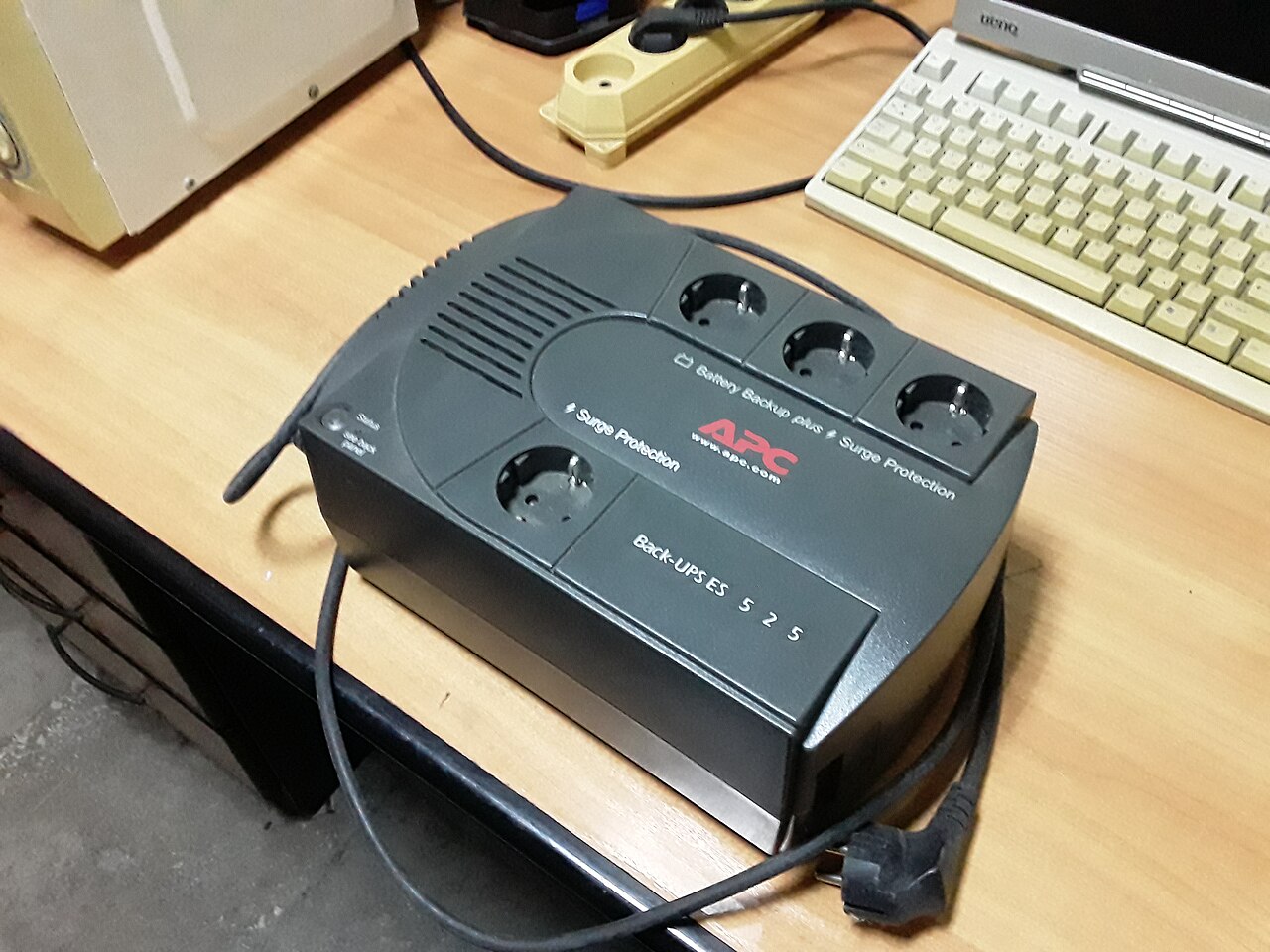
A small uninterruptible power supply on the ONT and router gives longer runtime and is available at modest cost. It is the standard solution for a household that needs the line to survive an evening outage.
The calculation is straightforward: the wattage of the two devices multiplied by the hours required. Most network equipment draws little, so a modest unit covers several hours comfortably.
Does the mobile network survive a power cut?
Partly. A mast with battery backup runs for a few hours, and one without fails immediately. A household relying on mobile as a backup should test it during a planned outage rather than assume it works.
Where the local mast has no backup, mobile is not a substitute for a fixed line. The two fail together, which is the worst possible combination for a household that thought it had redundancy.
What happens to medical alarms?
They stop. An alarm that used the copper line for power and signalling has no equivalent on fiber without a battery, and the household may not know until the first outage. That is a serious safety issue and it is easy to check.
Asking the alarm provider whether the device has its own battery, and testing it, is the responsible step. The answer sometimes changes which broadband product is suitable.
Can the household be put on a priority register?
Yes, in many markets. A priority register gives the provider information about vulnerabilities and, in some cases, access to backup equipment and priority repair. Registration is voluntary and free.
The register is underused because it is not advertised. A household with a dependency should ask about it when ordering rather than after an outage.
Does a power cut damage equipment?
Occasionally, through surges when power returns. A surge protector on the ONT and router is cheap and reduces the risk. A direct strike is a different matter and no protector helps.
The more common damage is a corrupted configuration rather than hardware failure. A restart after power returns usually resolves it, and a household that knows how to restart the router is better off than one that calls support.
What should be checked after an outage?
That the ONT has power and its optical light is steady, that the router has restarted, and that the service works on a wired device. Three checks that distinguish a household problem from a network one.
Where the lights are wrong after power returns, the fault is likely local and a call is justified. Where the lights are correct and there is no service, the network is still recovering and waiting is reasonable.
Does a longer cable run affect resilience?
No, but a longer run gives more opportunities for a poor connection. The failure modes in an outage are power and connectors, and neither is improved by more cable.
The relevant improvement is to have the ONT and router on a single protected circuit, so one switch or one battery covers both. That is a small electrician job and it makes the whole arrangement easier to manage.
What about a household that works from home?
Then the cost of an outage is measured in lost work rather than inconvenience, and the case for a UPS and a mobile fallback is straightforward. A mobile router with a battery, kept charged, covers the gap that a UPS cannot.
The combination is more robust than either alone: a UPS for short outages, a mobile hotspot for long ones. Testing both once is part of owning them.
Is this a reason to keep a copper line?
For a household with a genuine dependency and no alternative, sometimes. A copper line with exchange power is a resilience feature that fiber does not replicate, and a few households keep one for exactly that reason.
For most households the cost is not justified by the risk. The decision turns on what happens if the line is down for six hours, which is a question each household can answer for itself.
How should the risk be assessed?
Three questions: how often does the power fail, how long does it usually stay off, and what depends on the connection when it does. The answers determine whether a battery, a UPS, a mobile fallback or nothing is the right response.
Most households discover the answers during the first outage rather than before it. Asking in advance is cheaper.
Does the provider communicate during an outage?
Sometimes, through a status page or an automated message. The information is usually about the network rather than the household, and it rarely explains that the local power is the problem.
Checking whether the neighbours have power is a faster diagnosis than any status page. If the street is dark, the provider is not the issue.
What is the cheapest useful preparation?
A mobile phone with a data plan and a charged battery, plus a note of the router’s restart procedure. Both cost nothing beyond what the household already has, and both cover the majority of short outages.
A UPS is the next step and costs more than nothing. The order matters: the free measures first, then the purchase that fits the actual risk.
What should a vulnerable household do first?
Register the dependency with the provider, ask about backup equipment, and check whether any medical device has its own battery. Those three steps take an afternoon and cover the cases where the risk is real rather than theoretical.
The information is available and rarely volunteered. Asking is the whole of the method, and the cost of not asking is discovered at the worst possible moment.
What about a battery in the router itself?
Some routers include a small cell to preserve settings rather than to run the radio, which is not a backup. The distinction is easy to miss: a device that keeps its configuration through an outage does not keep the household online.
Checking what the battery is for, rather than that one exists, prevents a false sense of resilience. The specification usually says so plainly.
How should a battery unit be maintained?
By testing it once a quarter and replacing it when it no longer holds charge. A unit that has never been tested is an assumption, and the moment it is needed is the worst time to discover it has aged out.
A short planned test, with the mains switched off for a few minutes, confirms the unit works without waiting for a real outage. It takes ten minutes and it is the whole of the maintenance.
Fiber is more capable and less resilient than what it replaced, and nobody prints that on the order form. If your power went out tonight, what would stop working first?