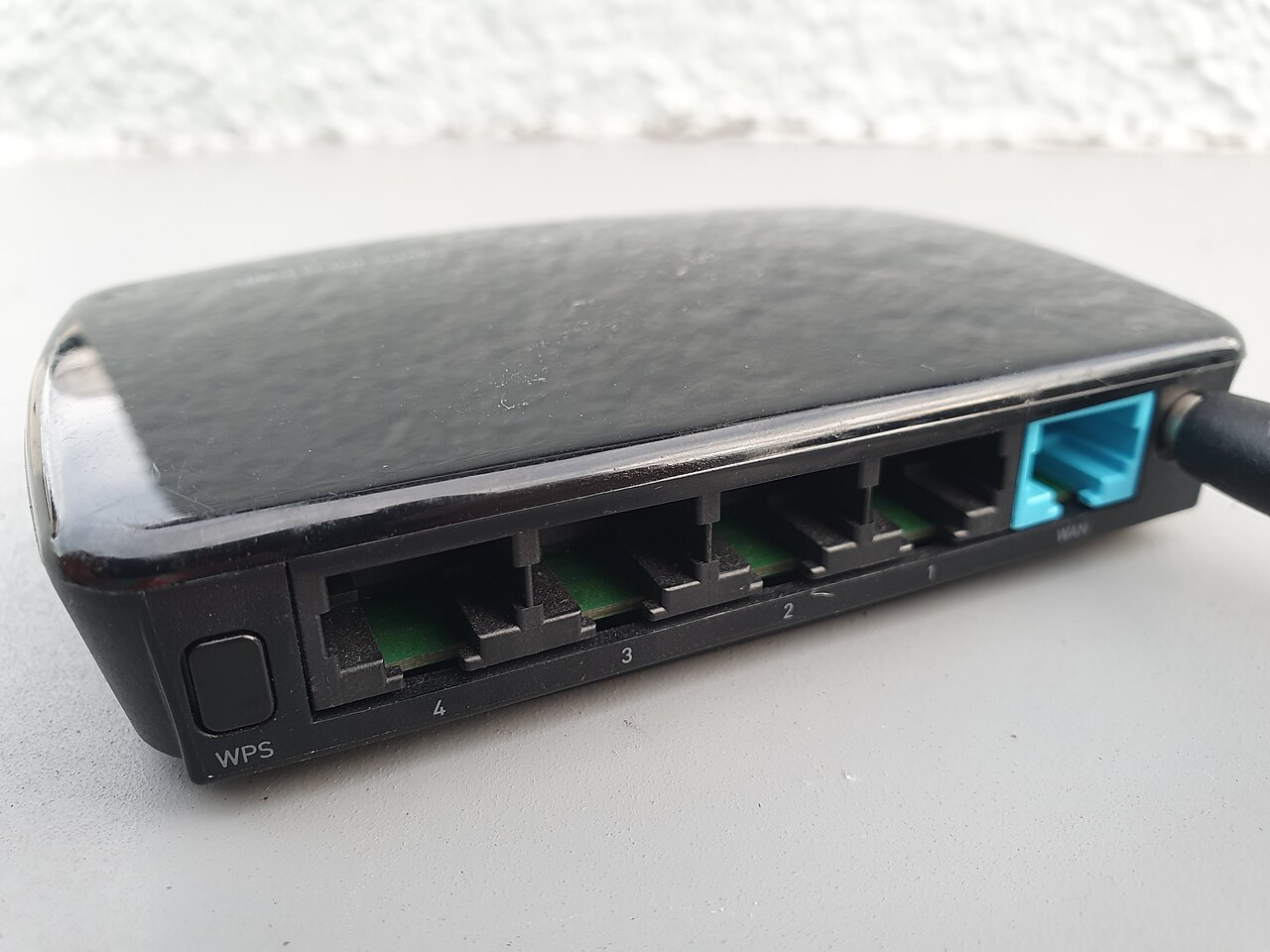
A router sits on a shelf in the hall, humming quietly, costing six units a month. Over two years that is a hundred and forty-four, which is roughly three times the price of a good router bought outright. Nobody chose to spend it, because nobody ever saw it as a purchase.
Equipment rental is the most reliably overlooked cost in a broadband contract. It appears as a line on the bill rather than in the offer, it survives the promotional period, and it often cannot be declined at the point of sale even when the customer already owns better hardware.
What is actually being rented?
Usually a combined modem and router, sometimes called a gateway, which terminates the line and provides Wi-Fi from a single box. Where fiber is used, the termination point is a separate unit, and the rented device may be only the router behind it.
Knowing which box does which job matters, because it determines whether you can replace the rented unit at all. A gateway that handles authentication cannot simply be swapped for a shop-bought router without a configuration step.
How much does rental add over a term?
Multiply the monthly charge by the number of months in the term, then add any activation or return fees. A typical figure of five to eight per month becomes a hundred and twenty to two hundred over twenty-four months, which is often more than the retail price of a mid-range device.
The comparison is not purely financial, because the rented unit comes with support, replacement and a return path if it fails. Whether that is worth the premium depends on how comfortable you are diagnosing a dead router at nine in the evening.
Can rental be refused?
Sometimes, and the wording matters. Some contracts include the rental as part of the service, with no opt-out, while others list it as an optional extra that can be removed at order or afterwards. A few allow you to use your own equipment but still charge a support fee for anything that goes wrong.
Ask the question before signing rather than after. Once the order exists, removing a recurring charge usually requires a new contract or a retention conversation, and neither is guaranteed to succeed.
Does your own router work on fiber?
Usually yes, with two caveats. The optical termination unit remains the provider’s, and your router connects to it by ethernet, which is straightforward. Authentication is the second caveat: some providers require a login from the router, and a few use a certificate that cannot be copied to third-party hardware.
The provider’s support pages usually state which connection method is used. If the words PPPoE or DHCP with a VLAN tag appear, a consumer router can normally be configured. If the words certified equipment appear, the options narrow.
What do you lose by using your own device?
Support, mostly. A provider will troubleshoot the line but not your hardware, and a fault that turns out to be a misconfigured router can generate a callout charge. You also lose the automatic replacement that a rental provides, which matters when a device fails and a household depends on connectivity for work.
What you gain is control: better Wi-Fi, a choice of firmware, and no monthly line that outlives the hardware’s useful life. For a household with a competent person in it, that trade usually pays.
Is the rented router usually good enough?
It is adequate for a small flat and marginal for anything larger. Rental units tend to be built to a price, with modest radios and limited coverage, and they are frequently the reason a gigabit line feels slow in a back bedroom.
This is the crux of the argument: the rental charge is not buying performance, it is buying convenience. A household paying for speed it cannot reach through the provided hardware is paying twice.
What about mesh systems?
A mesh system replaces the rented router in function and usually outperforms it in coverage. Two or three nodes are enough for most houses, and the cost is comparable to a year of rental, after which the saving accumulates.
The catch is that mesh nodes need a wired backhaul to perform at their best. Where ethernet runs are impossible, a wireless backhaul halves the throughput on each hop, which is worth knowing before buying three units.
Does the rental charge change mid-term?
It can, and often on a different schedule from the broadband line. The clause to check is whether equipment charges are subject to the same annual review, and whether the promotional waiver has its own end date.
A waiver that ends at month six produces a bill increase long before the second-year step, which is why the six-month mark is worth a look even in a contract that appears stable.
What happens to the router when you leave?
It goes back, at your cost in some contracts, and a missing return generates a charge that is often larger than the device’s value. The deadline is usually thirty days from the end of service, and the return must be tracked.
Photograph the device, the packaging and the label. Of all the fees discussed on this site, the non-return charge is the one most often raised in error, and the one most easily reversed with evidence.
Can you be charged for damage?
Yes, where damage goes beyond fair wear. A cracked casing, a missing power supply or a device returned without its stand can all attract a charge, and the schedule of amounts is sometimes published and sometimes not.
Ask for the schedule at the point of rental. A charge that cannot be found in a document is harder to justify, and the request itself tends to resolve the argument.
Is buying outright ever worse?
Yes, in two situations. Where the provider’s authentication cannot be replicated, your own router simply will not work. And where the household has nobody who can troubleshoot, the support attached to a rental has real value, particularly during a fault that takes a week to resolve.
Buying also commits capital to a device that will be obsolete in four or five years. Renting spreads that cost, at a margin, which is a legitimate reason some households choose it.
How should the comparison be made?
Three numbers: the rental total over the term, the purchase price of a device that meets the household’s needs, and the value of the support being given up. Then ask whether the difference buys anything other than peace of mind.
In most cases the rental total exceeds the purchase price within eighteen months. The exception is a household that expects to move providers often, where a rented device avoids carrying hardware between contracts.
What is the shortest route to removing the charge?
Ask at the point of order, in writing, whether the rental is optional and what the price would be without it. If the answer is yes, the order should be placed without it, because removing it later requires a change to the contract.
Where the order is already placed, a call to support asking to return the equipment and use your own is usually possible, though it may restart the term. Confirm that consequence before agreeing to anything.
Can you return the router and keep the contract?
Often yes, and it is the least known option. The rental is a separate charge for a separate service, so returning the device and using your own does not normally end the broadband contract. Some providers process it as a simple equipment return, others insist on a new term.
Ask the question in those words: can I return the equipment and continue on the same contract. A yes preserves everything already paid for, and a no tells you something about how the offer was really priced.
Does a rented router lock you to a provider?
Only in the mildest sense. The device is theirs and goes back, so there is nothing to carry between contracts and nothing to reconfigure on the way out. That is convenient for a household that switches every couple of years and irrelevant for one that stays.
Where a household has bought its own hardware, the switching calculation gains a small edge, because the same router works with the next provider and one purchase drops out of the cost of moving.
The cheapest router in the house is usually the one nobody is renting, and the most expensive is the one that quietly bills for two years after it stops being useful. When did you last look at the equipment line on your own bill?