A household has been on a cable connection for a decade and orders fiber because the upload figure is four times higher. The install is straightforward, the new line works, and the first evening reveals a problem nobody anticipated: the television service was part of the old arrangement, and the new network does not carry it.
Moving between technologies is not a like-for-like switch. The network, the equipment, the service bundle and the support path all change, and each of them has a consequence worth thinking about before the order is placed.
What is technically different?
Cable uses a shared coaxial segment, with capacity divided among the households connected to it. Fiber uses a dedicated optical path to the property, with capacity determined by the plan rather than by the neighbours.
The practical difference appears in the evening. A cable segment under load slows for everyone on it, while a fiber line slows only if the upstream network is congested somewhere else.
Why is the upload difference so large?
Because cable was designed for broadcast delivery, with a small return path, and the spectrum allocated to upstream is narrow. Fiber has no such constraint, so symmetric plans are straightforward to offer.
For a household that works from home, that single difference is usually the reason to move. For one that only streams, it is a smaller consideration.
What happens to the television service?
It usually ends with the cable contract. Fiber providers may offer a television product over the internet, which is a different service with different channel rights and a different user interface, and some offer nothing at all.
Checking what replaces the television before switching prevents the most common regret. A household that watches a specific sports package may find that the fiber provider does not carry it.
Does the phone number move?
It can usually be ported, though the process is different across technologies and occasionally slow. Where the number is tied to the cable service, the port is coordinated with the cease, and a failed port can leave the number inactive for days.
Requesting the port explicitly at order, and confirming it in writing, is the only protection. A number lost in a technology change is harder to recover than one lost in a same-network switch.
Can both services run at once?
Yes, because the two networks are physically separate. That is a significant advantage: the household can have fiber installed and tested while the cable service continues, then cancel the cable with confidence.
That overlap is the reason a technology change can be less stressful than a same-network switch, provided the household plans for a period of double billing.
What about the internal wiring?
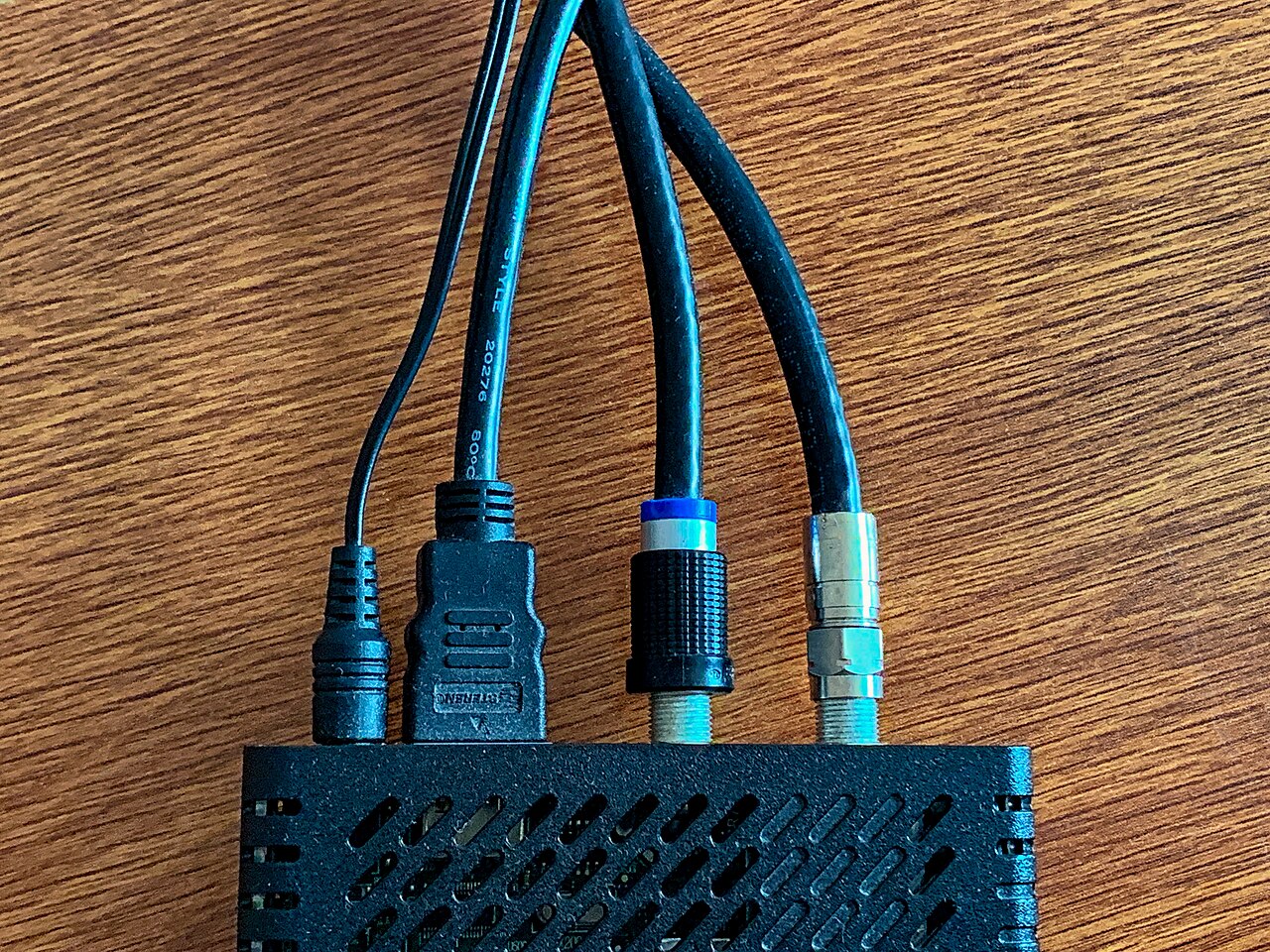
Cable arrives on coaxial cable, fiber on an optical one, and the two enter the property differently. The fiber install may need a new hole and a new termination point, which is a physical job rather than a swap.
The existing coaxial cable is not reusable for fiber, though it can sometimes be used to pull a new cable through the same route. That trick occasionally saves a difficult run.
Does the equipment change?
Entirely. The cable modem and the fiber ONT are not interchangeable, and neither is the router if the connection method differs. The old equipment goes back and the new arrives, which means two return obligations in some cases.
Tracking both returns is worth doing deliberately. A household that switches technologies has more equipment to account for, not less.
Is fiber more reliable?
Generally yes, for two reasons: no electrical interference on the optical path, and fewer shared components between the property and the network. The failure modes that cable suffers in wet weather do not apply.
The exception is the power dependency. A fiber line stops in a power cut, while a copper or cable line with line power may continue for a while, which matters for households with a dependency.
What about latency?
Usually lower and more consistent on fiber, because there is no shared segment scheduling and no upstream contention in the same way. For gaming and calls, that consistency is often more valuable than the extra speed.
The improvement is most visible in the evening, when a cable segment is busiest and a fiber line is not. A household that has tolerated an eight o’clock slowdown for years notices the difference immediately.
Does the price change?
Usually upward in the first year and comparable over the term. Fiber promotions are competitive, and the second-year rate is often higher than the cable rate the household was paying at the end of its own promotional period.
Comparing total cost over twenty-four months, including one-off charges and the loss of any bundled television, is the only fair comparison. The headline monthly figure is misleading in both directions.
What happens to the cable contract?
It ends, with an exit fee if the term has not expired. The fee is the main financial obstacle to a mid-contract switch, and it should be compared against the saving over the remaining months rather than treated as an absolute barrier.
Where the term has ended, the switch is straightforward and the only cost is the overlap. That is the natural moment to move, and it is worth diarising eighteen months in advance.
How long does the fiber install take?
Two to six weeks from order, depending on survey and availability. The cable service continues throughout, which means the household is never without a connection during the process.
That is the strongest argument for ordering before cancelling, and it applies with particular force in a technology change where the new line has to be built.
What should be tested after the switch?
Upload speed, latency and evening performance, all wired. Those three measures are where fiber differs most from cable, and they are the reason for switching in the first place.
Testing before cancelling the old service is the point of the overlap. A household that finds the new line disappointing can still reconsider, which is impossible after the cable contract ends.
Are there households that should not switch?
Yes. Those with a bundled television service they cannot replace, those whose work depends on the line surviving a power cut, and those still inside a cable term with a large exit fee and no pressing need. The technology is better; the circumstances are not always.
That is an unfashionable position and it is the honest one. A switch is a project with costs, and the benefits are largest for households whose usage matches what fiber is good at.
What about a building with a cable installation?
Blocks wired for cable may not have fiber, or may have it only to the building. In that case the choice is constrained by the infrastructure, and the check is the same address-level enquiry as for any other property.
A building with both networks is the ideal case: two providers, real competition and a genuine switching option at the end of each term.
How should the move be sequenced?
Order fiber, wait for the activation, test it for a fortnight, then give notice on cable to end after the test period. Port the number, return both sets of equipment, and check the final bills against the terms.
Six steps, in that order, with the overlap treated as a cost rather than a mistake. It is the same discipline as any switch, adjusted for a technology change.
What is the realistic expectation?
A better connection for work and calls, a comparable connection for streaming, and a period of inconvenience during the transition. The change is worth making for the right household and not a universal improvement.
The question to answer first is what the household actually does with the line. Everything else follows from that.
Does the fiber install reuse the cable entry point?
Often yes, because the existing entry hole can be used for the new cable. The engineer may prefer a new hole for a cleaner run, which is a decision the household can influence during the walk.
A reused entry is neat and occasionally tight. Where the hole is shared with a power cable or a water pipe, a new entry is safer, and the engineer will usually say so.
What happens to the cable socket?
It stays on the wall and becomes redundant. A household should not remove it, because the cable provider may require it to remain, and because a redundant socket is a useful record of what was there.
Where the cable contract has ended and the equipment returned, the socket is simply unused. It does no harm and it occasionally helps a later occupant.
Is the fiber service affected by the old connection?
No. The two networks are physically separate, so a fault on one does not affect the other. That independence is the practical advantage of the overlap period.
It also means the old service can be used as a fallback during the first fortnight of the new contract, which is when a problem would be discovered.
A technology change replaces the road as well as the vehicle, and the roadworks are the part nobody photographs. If you switched from cable to fiber tomorrow, what would you miss?